

Sizzling Survival: Food Truck Heroes Cook in 130° Infernos So You Can Eat!
Chefs sweat through brutal summers — but their passion keeps the grills fired up.
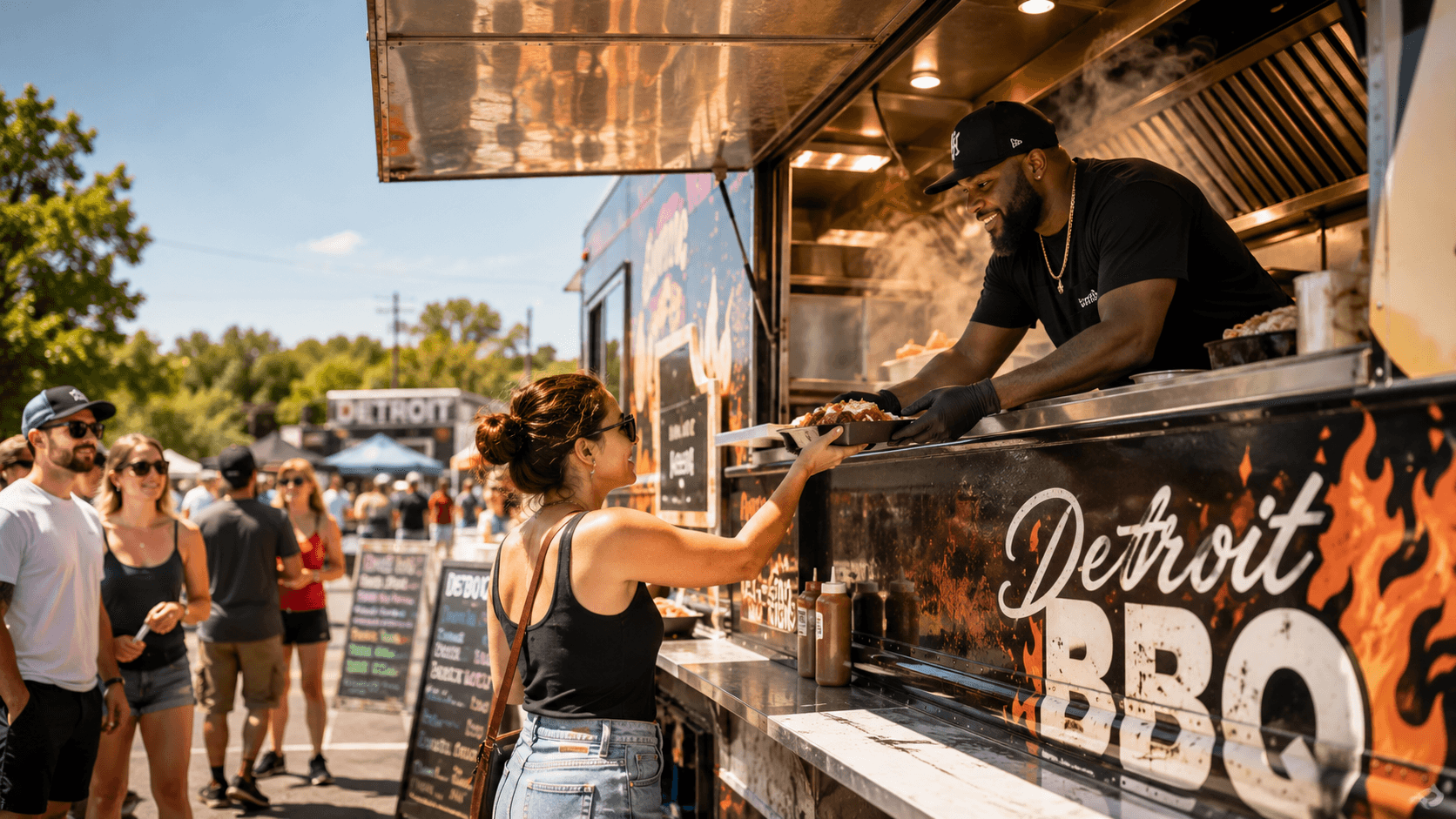
As West Michigan endures its sixth consecutive day of temperatures in the 90s, food truck owners face a hidden danger most customers never see. Inside these mobile kitchens, the heat becomes extreme... sometimes dangerously so.
Andrew DuBiel, owner of Mobile Crave in Kalamazoo, has measured temperatures as high as 130 degrees inside his taco truck. The combination of a 350-degree flat top grill, two stove burners, and summer heat creates what he calls a "hot tin can."
The extreme conditions recently forced DuBiel to make a difficult decision. He temporarily closed his roadside location for two days, prioritizing safety over sales. "Sitting out in this heat for nine hours just isn't feasible," he explained. Some Owners See Opportunity in the Heat
Not every food truck owner closes when temperatures rise. Glen Fisher, who runs Flying F Smoked Meats, sees opportunity in the heat wave. "The customers don't want to cook at home either," he said. "I get to do the cooking."
Fisher prepares for hot days by hydrating well before opening. "I've been drinking Gatorade and water all morning," he shared. His truck temperatures typically reach 120 degrees during summer events, with peaks around 130 degrees on the hottest days.
Food Safety Requirements Add Pressure
The Michigan Department of Agriculture and Rural Development requires strict temperature controls. Cold foods must stay at or below 40 degrees Fahrenheit, while hot foods need to remain at or above 140 degrees. The range between these temperatures creates what's known as the "temperature danger zone" where bacteria multiply rapidly.
DuBiel explained that keeping refrigerators operating safely becomes harder as outside temperatures climb. "The refrigerators work too hard if it's too hot in the surrounding environment," he said. His truck uses two serving openings to improve airflow plus an air conditioning unit.
Different Strategies, Same Goal
Just feet away from his son's taco truck, Joel DuBiel operates JD's Fresh Squeezed Lemonade with a different approach. His air-conditioned trailer becomes a cooling station for other vendors. "My place is where everyone wants to come take a break," he said.
Interestingly, extreme heat actually hurts his lemonade business. "When it gets too hot, no one does nothing," he observed. "We love the 80 to 85-degree days."
All three owners agree on one thing. They would rather battle summer heat than face Michigan's harsh winters. "At least during the heat you don't have to worry about sliding off the road if there's icy conditions," Andrew DuBiel said. Fisher agreed, noting his smokers actually work better in warm weather.
Safety Remains the Priority
Whether serving smoked brisket, tacos, or fresh-squeezed lemonade, these mobile vendors put safety first. That means staying hydrated, monitoring food temperatures constantly, using proper refrigeration, and sometimes making the hard call to temporarily close when conditions become unsafe.
Frequently Asked Questions
Q: How hot do food trucks get inside during summer? A: Temperatures inside food trucks can reach 120 to 130 degrees Fahrenheit during extreme heat, especially with cooking equipment running continuously.
Q: What are Michigan's food truck temperature requirements? A: The Michigan Department of Agriculture requires cold foods at or below 40 degrees and hot foods at or above 140 degrees to prevent bacterial growth.
Q: How do food truck owners stay safe in extreme heat? A: Owners stay hydrated with water and electrolyte drinks, use air conditioning when possible, improve airflow with multiple serving windows, and sometimes temporarily close during dangerous conditions. |
Stay up to date with our local news!
Get articles like this delivered to your inbox.
Subscribe Now
12 Comments
Join the conversation
Joel selling lemonade in 90 degree heat and saying it hurts his business is kind of ironic lol. figured that would be the best time
Renee M.Ha I thought the same thing at first! But I guess when it gets THAT hot people just kind of lose their appetite or don't want to be outside at all. Makes sense once you think about it. 85 degrees is basically perfect patio weather.
It surprised us too, but Joel told us that when temperatures get extreme, people actually retreat indoors entirely — he says the sweet spot for lemonade sales is actually those comfortable 80- to 85-degree days!
didnt know the fridge thing was such a problem. makes sense though if its that hot inside the truck the refrigerator is basically fighting a losing battle
dave_kzooRight? I never thought about it either until I read this. The fridge at home struggles when our kitchen gets warm in summer, so imagine trying to keep food cold when the whole truck is basically an oven. Kind of scary from a food safety standpoint.
You nailed it — as Andrew DuBiel explained, refrigerators have to work exponentially harder when the surrounding environment is already at 130 degrees, which is why maintaining that critical 40-degree-or-below threshold becomes such a real safety concern.
Glen Fisher has the right attitude honestly. I never want to cook when its this hot out so im glad someone else will
Sandra KowalskiSame, I ordered from Flying F a couple weeks ago and the brisket was awesome. Glad he keeps showing up even when it's brutal out. Definitely easier to just pull up and grab food than heat up my whole kitchen.
Glen really does embody that glass-half-full mindset, and his point about customers not wanting to cook at home is a smart one — though we'd recommend matching his prep routine and hydrating well before heading out to visit him!
130 degrees inside that truck?? no thank you, props to those guys for sticking it out
Mike T.Seriously. I walked past a food truck at the Farmers Market last Saturday and just the wave of heat coming out the window was enough for me. Can't imagine being in there all day.
Our reporters felt the same way — and that's without a 350-degree flat top grill running alongside you for nine hours straight, which is exactly why Andrew made the tough call to close for two days.